MOQ, stock and lead time: how the calendar actually runs
A minimum order is not a policy, it is a consequence. It comes from three things: the dye lot, the print plate, and the weaving run. Once a buyer knows which of the three is binding, the number stops looking arbitrary and the calendar becomes predictable.
The dye lot
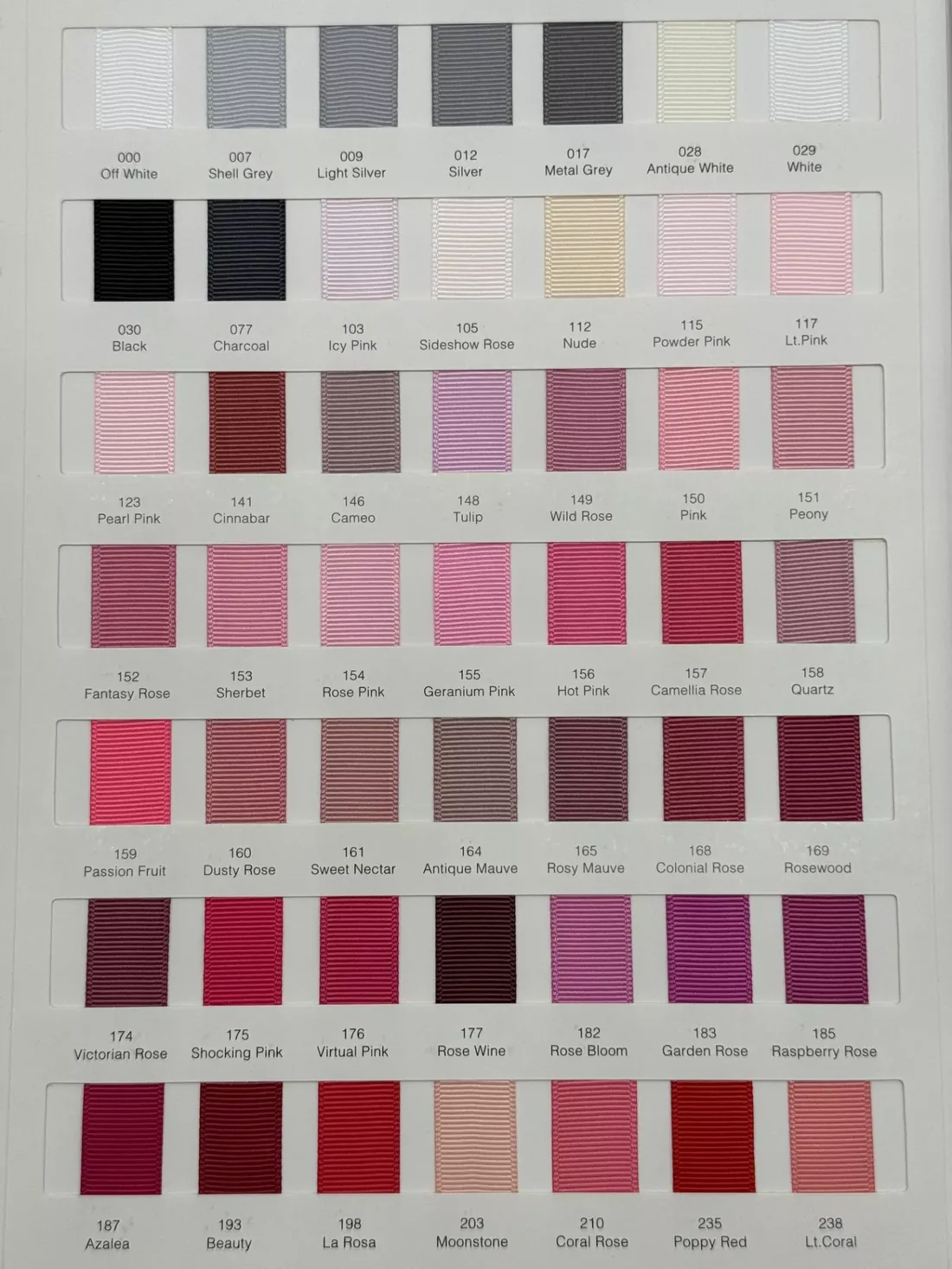
A dyed-to-match colour is a batch. The dyhouse loads a machine with a fixed volume, so the minimum is whatever that volume produces in the width you want. A stock colour has no such constraint because it was dyed before you asked, which is why one roll is a valid order from stock.
The print plate or cylinder
Screen and gravure both need a plate or a cylinder made for the artwork. The cost of that tool is spread over the run, so below a certain length the ribbon becomes a tool-amortisation exercise. Digital print has no plate, which is why short runs and multi-colour designs go that way.
The weaving run
Greige ribbon is woven in runs on a loom, and a run has a length. A printer buying greige by the metre meets this constraint rather than the dye lot, and that is why greige pricing is quoted by volume.
Planning backwards from a date
Add it up in the order it happens: dip or strike-off two weeks, approval one week, bulk three to four weeks, inland and sea freight four to six weeks to Europe. A launch in twelve weeks is comfortable with a stock colour and tight with a dyed one, and impossible with a new plate and sea freight.
Questions this guide raises
- Is a minimum negotiable?
- It moves with the method. A shorter run is possible in digital print or from stock; it is not possible under a gravure cylinder. Asking which of the three constraints is binding gets a real answer faster than asking for a discount on the minimum.
- Can a repeat order be smaller?
- Usually yes, once the dip and the plates exist, because the tooling is already amortised. The second order is where the smaller quantity becomes economic.
- How long do stock colours really take?
- 24 to 48 hours out of the warehouse once terms are agreed. Cut lengths over 50 m per colour add a working day because they are cut to order.
Ask about your own programme
Send the reference you want matched, the width in millimetres and the quantity per colour. You get a price, a lead time and a sample date back, usually within one working day.